A commercial garage door is part of how your facility runs and how it stays secure. When it fails, a delivery can sit at the dock, a bay can stay closed, or an opening can stay unsecured overnight. Some failures have a quick, safe fix your own team can make. Others call for a trained technician right away, for safety and to get the repair done correctly.
This guide covers the common emergency problems, what you can check safely, and the failures that belong to a technician. It starts with misaligned sensors and power outages, then moves to broken springs, off-track doors, and cable issues. For emergency service from RCI Doors™, see our commercial door service and repair page.
Keep people and vehicles clear of the door, then check the two problems your team can handle safely: sensors that are blocked or out of alignment, and a power outage. If the door still will not work, or you suspect a broken spring, a damaged cable, or an off-track door, stop and call a technician. Those parts hold high tension, and trying to fix them yourself is both risky and often ineffective.
Misaligned Door Sensors
Misaligned sensors are one of the most common reasons a door refuses to close properly. Here is how to spot the problem and fix it.
Signs of Misaligned Sensors
Sensors detect obstructions in the door’s path, which prevents accidents and damage. When the sensors are out of alignment, they can signal that something is blocking the door even when the path is clear. Do not bypass them to force a door closed. They are the door’s safety system.
Common signs of misaligned sensors include:
- The door begins to close and then instantly reverses.
- The operator’s light blinks several times after an attempt to close the door.
- You hear clicking when you try to close the door, but nothing happens.
How to Check Sensor Alignment
Checking the sensors is relatively easy:
- Look for the lights: Sensors typically have indicator lights. When the sensors are aligned, both lights should be solid. If one or both lights blink or stay off, the sensors are out of alignment.
- Inspect for obstructions: Dirt, debris, and even spider webs can block a sensor, so clean the area around each one.
- Check for damage: A bump or impact, such as a pallet or forklift, can knock a sensor out of position. Make sure the brackets holding the sensors are intact and the sensors point directly at each other.
How to Adjust the Sensors
If the sensors are misaligned, follow these steps:
- Loosen the screws on the sensor brackets so you can move the sensors up or down.
- Adjust the sensors until the indicator lights stop blinking and stay solid.
- Tighten the screws to secure the sensors in place.
Then try closing the door again. If it runs smoothly, the problem is resolved. If the lights keep blinking or the door still will not close, call a technician.
No Power: Using the Manual Release
A power outage stops the operator from running the door, but you can usually still move the door by hand.
What to Do When Power Goes Out
Most operators include a way to disengage them so the door can be moved manually, such as a pull cord or a hand chain. The release type depends on the operator, so check the manufacturer’s instructions before you use it.
How to Release and Move the Door by Hand
- Find the manual release: Your operator’s manual shows where it is and how it works.
- Disengage the operator: Using the release detaches the door from the powered operator so it can be moved by hand.
- Lift the door: Be ready for the door to be heavy without the operator’s help, since commercial doors are often large. Make sure the door is fully open before any vehicle or forklift passes through.
If the door will not move easily, stop. A door that feels incredibly heavy when you lift it by hand can have a broken spring.
Ask About a Battery Backup
If power outages are common at your facility, ask about an operator with a battery backup. Operators with a battery backup can keep working during an outage, so your team does not have to move the door by hand. Some also allow remote control, which adds convenience and security. You can read more about commercial motor operators on our service page.
Call a Technician Right Away: Broken Springs, Off-Track Doors, and Cable Issues
Some commercial door problems cannot be fixed with a little in-house effort. Trying to fix them yourself can be both ineffective and risky. These are the most common serious problems that warrant a call to a professional.
Broken Springs
Springs are under an immense amount of tension, and when they break, they can cause significant damage or injury. A loud bang when you operate the door likely means a spring has snapped. A door with a broken spring will either refuse to open or feel incredibly heavy when you try to lift it by hand.
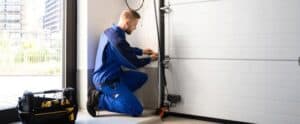
Never try to fix or replace a broken spring yourself. The tension can make a spring snap back violently and cause injury. Trained technicians handle spring replacements safely and make sure the door runs smoothly and safely again. For background on component wear, read our guide to the lifespan of commercial garage door components.
Off-Track Doors
A door that comes off its tracks will likely get stuck or refuse to open and close properly. That can happen when an object strikes the door, such as a forklift or a truck, or when the rollers wear out or break over time.
An off-track door needs precise realignment, and improper handling can damage the door system further. Technicians have the tools and expertise to get the door back on track safely and efficiently. Keep people and vehicles away from the door until it is fixed.
Cable Issues
The cables work in sync with the springs to lift and lower the door. Over time, cables can wear down or snap, and the door will malfunction.
As with springs, cable work is dangerous because of the tension on the cables. A technician has the right equipment and training to replace them without putting themselves, or your staff, at risk.
Quick Symptom Guide
| What you notice | Likely cause / Can staff check it? |
|---|---|
| The door starts to close, then reverses | Misaligned or blocked sensors. Yes, clean and realign the sensors |
| The operator’s light blinks after a close attempt | Misaligned sensors. Yes, clean and realign the sensors |
| You hear clicking, but the door does not move | Misaligned sensors. Yes, clean and realign the sensors |
| The door will not run during an outage | No power. Yes, use the manual release if the door moves freely |
| A loud bang, then the door will not open or feels incredibly heavy | Broken spring. No, call a technician |
| The door is stuck or will not open and close properly after an impact | Off-track door. No, call a technician |
| The door malfunctions, with a worn or snapped cable | Cable issue. No, call a technician |
When to Call RCI Doors™
Door emergencies happen at inconvenient times, and knowing how to handle them saves time and stress. For minor problems such as misaligned sensors or a power outage, a little troubleshooting by your team can often solve the problem. For broken springs, off-track doors, and cable issues, call a professional so the repair is done safely and correctly.
When trouble strikes, contact RCI Doors™. Our team handles emergency commercial garage door repair, and whether you need immediate help or want to upgrade to a more reliable door system, we can help. After-hours service is available, and special rates apply. Call 336-626-5125 in the Asheboro area or 336-708-4141 in the Charlotte area.
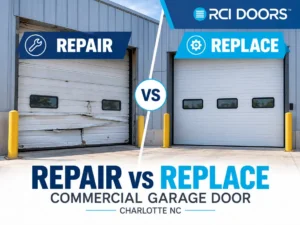
If the same door keeps failing, our guide to repairing vs. replacing a commercial garage door can help you decide. A routine maintenance program helps catch problems before they strand a door. In the Charlotte area, our Charlotte commercial garage door repair guide covers what to do after a breakdown.
After-hours service is available. Special rates apply.
Sensors and power are the two checks your team can make safely. Springs, cables, and off-track doors are technician work, and the tension involved is the reason.
Sensors and power are the two checks your team can make safely. Springs, cables, and off-track doors are technician work, and the tension involved is the reason.