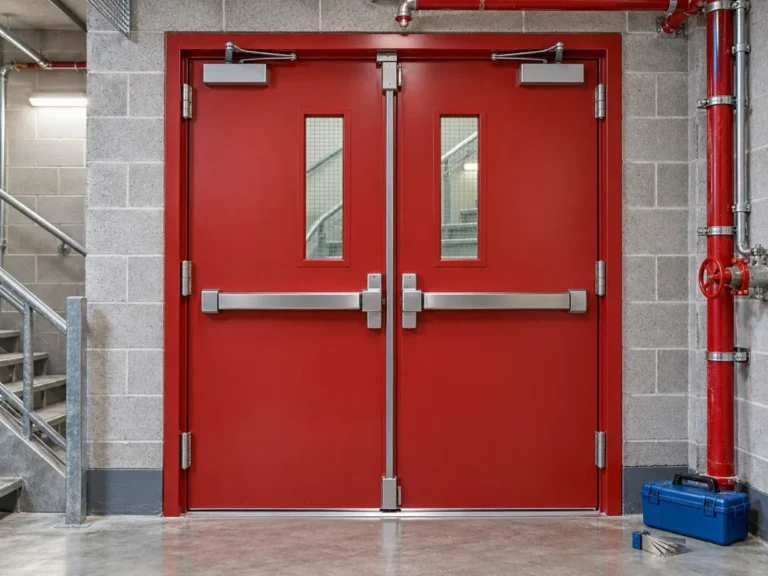
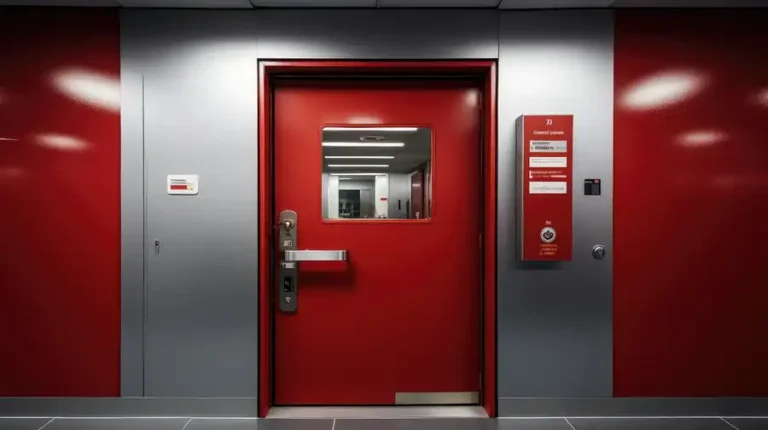
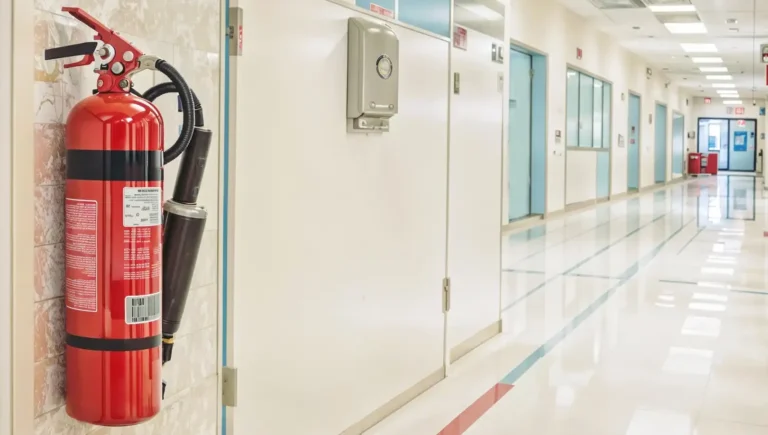
Fire doors are life-safety systems — and they only work if they close completely, latch properly, and maintain their rated integrity when it matters most. NFPA 80 requires annual inspections and testing of every fire door assembly in your facility.
RCI Doors™ performs those inspections, issues compliance documentation, and repairs deficiencies on the spot — serving commercial, healthcare, government, and institutional facilities across North Carolina and the greater Charlotte metro, including Greensboro, Winston-Salem, Asheboro, Huntersville, Rock Hill, and Fort Mill.
Fire Door Inspection & Testing
Every fire door inspection RCI Doors™™ performs is held to five non-negotiables.
- NFPA 80 Inspection Process
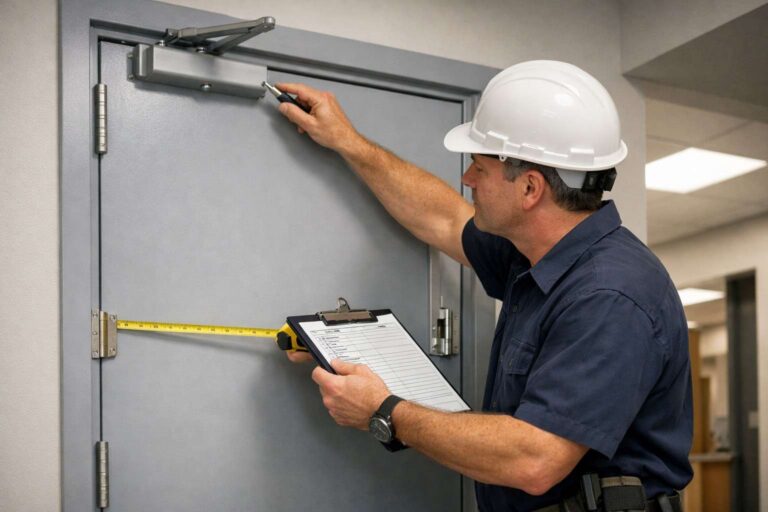
Every inspection evaluates the complete fire door assembly — door, frame, hardware, seals, self-closing mechanism, and clearances — against the current NFPA 80 standard. - Certified Inspection Tags
After a passing inspection, we affix an official fire door inspection tag to every door, providing documented proof of compliance for building owners, AHJs, and insurance carriers. - Digital Inspection Records
Every inspection is logged in our digital records system, accessible on demand for emergency response, insurance audits, Joint Commission surveys, or AHJ requests. - Automatic Annual Reminders
We track your inspection schedule and send reminders when your next annual inspection is due — so NFPA 80 compliance never falls through the cracks. - Same-Visit Repair & Remediation
When we identify a deficiency during inspection, our technicians can repair it in the same visit — no second vendor, no rescheduling, no gap in your compliance record.
Fire Door Services We Provide
- Inspect
NFPA 80 annual fire door inspections for rolling, overhead, and sliding fire door assemblies; fire door drop tests (FDDT); full compliance assessments. - Certify
Official inspection tags, digital documentation, and compliance records suitable for AHJ audits, insurance reviews, and accreditation surveys (Joint Commission, CMS). - Repair
Same-visit deficiency remediation: hardware replacement, intumescent seal repair, clearance adjustment, label replacement, and self-closing mechanism repair. - Install
New fire door installation, fire door assembly replacement, and retrofit of non-compliant openings to meet NFPA 80 and local building code.
NFPA 80 requires annual fire door inspections for all fire-rated assemblies. Non-compliance can result in AHJ citations, failed building inspections, voided property insurance, and personal-injury liability in the event of a fire. Healthcare facilities face additional exposure: The Joint Commission and CMS both require NFPA 80 documentation — making missed or undocumented inspections a direct accreditation risk.
Brands We Carry and Service
Fire Door Repair, Maintenance & Replacement
Fire doors fail inspection for predictable reasons: improper clearances, worn or missing seals, hardware that no longer latches, self-closers that don’t fully close, and labels that have been painted over or removed.
RCI Doors™™ repairs deficiencies across all fire door types we inspect and install. When a door is beyond repair, we replace the assembly — keeping every component in spec and every record up to date under a single local service relationship.
Common fire door deficiencies we repair:
- Clearance gaps exceeding NFPA 80 limits (top, bottom, and sides)
- Missing, painted-over, or damaged fire door labels
- Worn or missing intumescent seals and smoke gaskets
- Self-closing mechanisms that fail to fully close and latch
- Damaged or non-compliant door hardware (hinges, latches, coordinators)
- Obstructed or propped-open fire doors in violation of NFPA 80
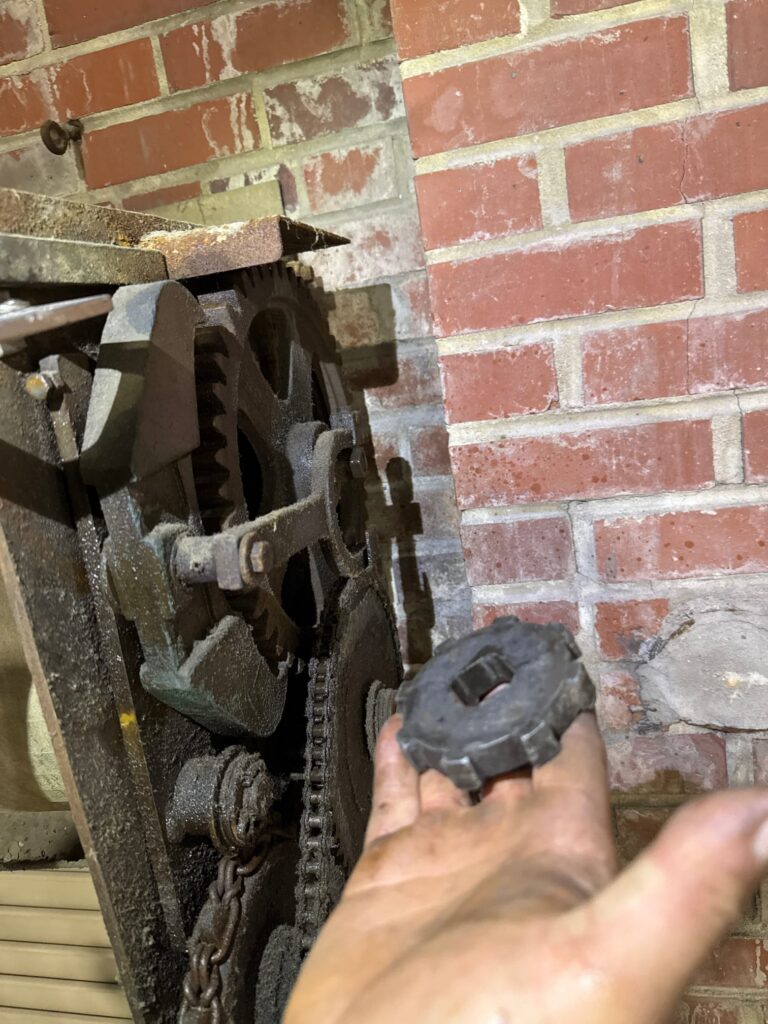
- Fire door drop test failures — broken fusible links, misaligned tracks, improper reset
Who Needs Fire Door Inspections
NFPA 80 applies to any building with fire-rated door assemblies. The following facility types face the most scrutiny from AHJs, insurers, and accrediting bodies.
Ready to schedule your fire door inspection?
Our certified technicians inspect, document, and repair fire door assemblies across the Triad and Charlotte metro — and can have your compliance records ready before your next audit.
Get a Free Quote
Frequently Asked Questions
Does an overhead fire door need to be tested annually?
Yes. NFPA 80 requires that all fire door assemblies — including overhead rolling fire doors — be inspected and tested at least once per year by a qualified inspector. Many jurisdictions also require annual testing as part of local building codes and workplace safety regulations. The inspection must cover the complete assembly: door, frame, hardware, seals, and activation mechanism. RCI Doors™ performs annual NFPA 80 inspections and issues certified documentation for every door we inspect.
What is NFPA 80?
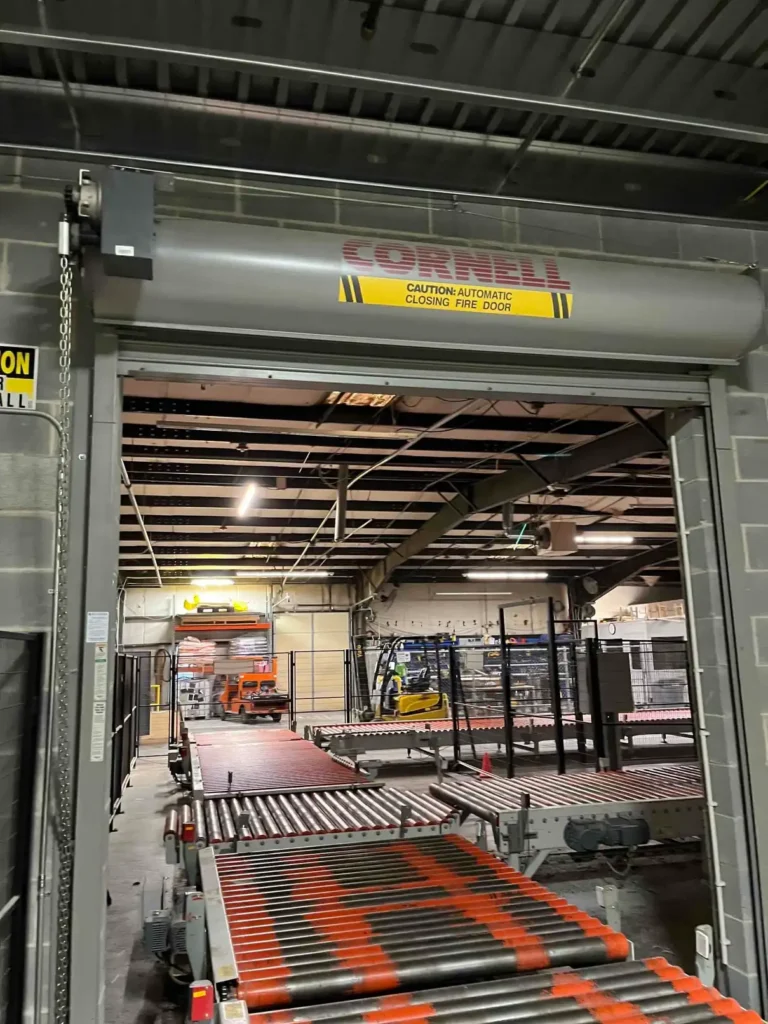
A fire door drop test (FDDT) is a required safety and compliance procedure for rolling and sliding fire doors. During the test, the door is activated to verify it closes fully and properly when triggered by a fire alarm or heat sensor. Technicians check closing speed, alignment, and latch engagement to confirm the door will seal the opening in the event of a fire. Drop tests are required annually under NFPA 80 and identify broken components, misalignment, or improper reset mechanisms before they become a compliance failure.
What is a fire door drop test?
A fire door drop test (FDDT) is a required safety and compliance procedure for rolling and sliding fire doors. During the test, the door is activated to verify it closes fully and properly when triggered by a fire alarm or heat sensor. Technicians check closing speed, alignment, and latch engagement to confirm the door will seal the opening in the event of a fire. Drop tests are required annually under NFPA 80 and identify broken components, misalignment, or improper reset mechanisms before they become a compliance failure.
Do fire doors have to be labeled or certified?
Yes. Fire doors must carry a manufacturer’s label certifying they have been tested and listed to the appropriate fire-rating standard. The label — typically on the door edge or frame — shows the fire rating, manufacturer, and listing agency. Painting over, removing, or obscuring the label voids the door’s certification and constitutes an NFPA 80 violation. When RCI Doors™ finds a door with a damaged or missing label during inspection, we document the deficiency and can coordinate replacement or relabeling as part of our same-visit repair service.
What are the most common fire door deficiencies?
The most frequently cited fire door deficiencies during NFPA 80 inspections are: clearance gaps that exceed the 1/8″ maximum (top, sides) or 3/4″ maximum (bottom); damaged, painted-over, or missing labels; worn or absent intumescent seals and smoke gaskets; self-closers that do not fully close and positively latch the door; non-compliant hardware such as unapproved hold-opens or incorrect hinges; and doors that have been propped open or obstructed. RCI Doors™ can repair all of these deficiencies, in most cases during the same visit as the inspection.
What happens if a fire door fails inspection?
A failed fire door inspection means the assembly has a documented deficiency that must be corrected before the door is considered compliant. The building owner is responsible for remediation — and until it is completed, the facility may be exposed to AHJ enforcement action, insurance coverage disputes, and liability in the event of a fire incident. RCI Doors™ documents every deficiency found during inspection and can perform most repairs the same day, allowing you to resolve compliance issues immediately rather than scheduling a return visit.
Can RCI Doors™ repair fire door deficiencies on the same visit as the inspection?
Yes — in most cases. Our technicians arrive equipped to address common deficiencies: seal replacement, hardware adjustment, clearance correction, self-closer repair, and minor frame work. If a deficiency requires a special-order part or more extensive repair, we document it, schedule a return visit, and provide the repair record when the work is complete. Either way, every deficiency gets a documented resolution — not just a note on an inspection report.